


Jeans are often treated as a basic purchase, but finding a comfortable pair can involve more decisions than expected. Two pairs with the same waist measurement may fit very differently because of their rise, leg shape, fabric composition, and construction.
Instead of choosing jeans based only on a familiar size or a photograph, it helps to understand the features that determine how they sit and move.
Leg Shape: Balancing the Silhouette
Once the waist is sorted, the leg cut dictates the overall aesthetic. Use this table to match the shape to your goal.
| Leg Shape | Characteristics | Best Suited For |
|---|---|---|
| Straight | Consistent width from hip to hem. | The All-Rounder. Works for almost every body type. A tailored alternative to skinny jeans. |
| Slim / Tapered | Snug through the thigh, narrowing at the ankle. | Athletic Builds. Great for showing off footwear or for those with muscular thighs who want a clean look. |
| Wide Leg | Wide and straight from hip to hem. | Hourglass Figures. Balances out hips and adds a contemporary, relaxed feel. Best worn with heels or platforms. |
| Bootcut / Flare | Fitted through the thigh, flaring below the knee. | Petite & Curvy. The flare balances hips and adds height, especially when worn with heeled boots. |
| Skinny | Form-fitting from waist to ankle. | Tall & Lean. Best for creating a streamlined silhouette. Often includes stretch for comfort. |
Start with the rise
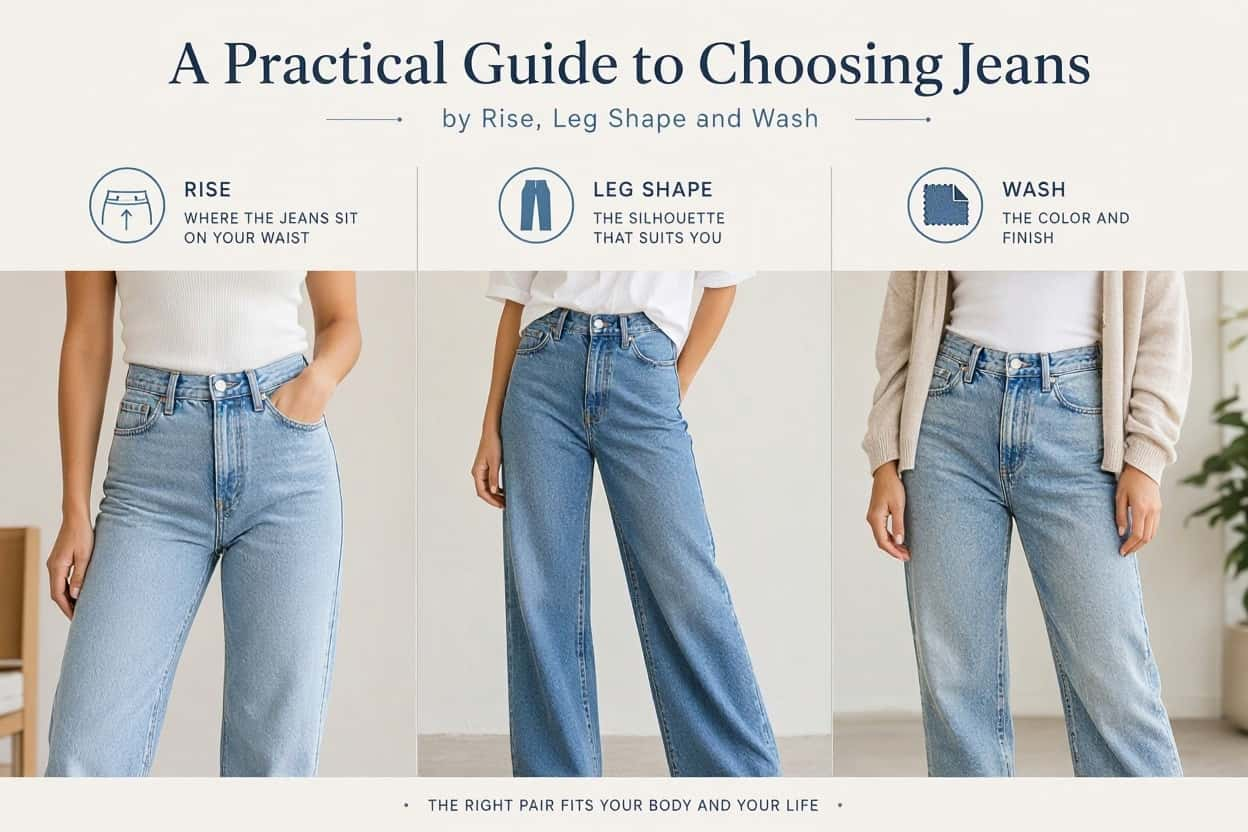
The rise is the distance between the crotch seam and the top of the waistband. It determines where the jeans sit on the waist and has a noticeable effect on comfort.
Low-rise jeans sit closer to the hips. They can work well with certain short tops and relaxed silhouettes, although the waistband may feel less secure during movement for some people.
Mid-rise jeans generally sit around the natural waist or slightly below it, depending on the cut. Many people find this position practical because it provides a familiar fit without feeling particularly high or low.
High-rise jeans extend farther up the waist. They can create a defined waistline and work well with tucked-in shirts, cropped tops, and fitted knitwear.
The right rise is not simply a matter of fashion preference. Body proportions, torso length, and personal comfort all influence how a waistband feels.
Understand the main leg shapes
The leg shape determines how the denim falls from the hip toward the ankle.
Straight-leg jeans maintain a relatively consistent width through the leg. They are versatile because they do not cling closely to the calf, but they also avoid the dramatic volume of wider cuts.
Tapered jeans gradually become narrower toward the ankle. They can be useful when you want additional room around the thighs without excessive fabric near the shoes.
Wide-leg jeans provide more space through the entire leg. Depending on the fabric and rise, they can create a fluid, relaxed appearance or a more structured silhouette.
Bootcut jeans widen slightly toward the hem. Their shape was originally useful for accommodating footwear, but they can also balance the appearance of the lower leg.
Flared jeans widen more noticeably from the knee downward. The amount of flare varies considerably, from subtle openings to dramatic silhouettes.
Rather than deciding which cut is universally best, consider the shoes and garments you already wear. Jeans should work with your existing wardrobe rather than require an entirely new collection of clothing.
Look beyond the waist label
Denim sizes are not perfectly consistent across brands. One manufacturer’s size may feel comfortable while another’s equivalent measurement feels restrictive.
Even within the same brand, different cuts can fit differently. A pair designed for a narrow hip and a pair with a relaxed seat may have identical waist labels but very different proportions.
When possible, check the garment’s actual waist, hip, thigh, and inseam measurements. If shopping online, compare them with jeans you already own that fit comfortably.
The inseam deserves particular attention. A pair that is too long may bunch around the shoes, while a short inseam can change the intended shape of wide-leg or flared jeans.
Choose denim weight according to how you wear it
Denim weight influences the way jeans hang and feel.
Lightweight denim is usually softer and easier to wear in warm weather. It may feel more comfortable when sitting or moving frequently, although very lightweight fabric can lose structure more quickly.
Medium-weight denim is a useful everyday option. It generally provides enough structure to maintain the shape of the jeans without feeling excessively stiff.
Heavyweight denim often has a firmer hand and can hold a defined silhouette. However, it may require more time to soften and can feel less comfortable in hot weather.
Stretch content is another consideration. A small amount of elastane can improve flexibility, especially in close-fitting cuts. Jeans with substantial stretch may feel comfortable initially but can behave differently after repeated wear and washing.
Understand denim washes
The wash describes the color treatment and appearance of denim.
Dark indigo jeans usually have a more uniform, saturated appearance. They can be suitable for smart-casual settings and often look relatively polished with shirts, knitwear, and structured jackets.
Medium washes provide a familiar everyday appearance and work well with many casual garments.
Light washes have a more relaxed visual character. They can be particularly useful in warmer seasons or when paired with simple tops and lightweight footwear.
Distressed finishes, faded areas, and strong whiskering create additional visual interest. However, these details can make jeans less versatile if you want them to work across many different outfits.
Check the areas that are easy to overlook
A comfortable pair of jeans should allow you to sit, bend, walk, and climb stairs without constant adjustment.
Pay attention to the waistband when sitting down. It should not dig uncomfortably into the stomach or leave a large gap at the back.
Check the crotch area for excessive pulling or loose fabric. Look at the pockets too. Their placement and size can influence both comfort and the visual appearance of the jeans.
The seams should lie relatively smoothly, and the fabric should not twist noticeably around the legs.
Think about alterations before rejecting a good pair
Some fit problems can be corrected easily. A tailor may shorten the hem, adjust the waist slightly, or make small changes to the leg opening.
Other problems are harder to fix. Excessive tightness through the hips, an uncomfortable rise, or a poorly positioned crotch seam may require substantial alterations.
It is usually better to find jeans that fit well through the waist, hips, and upper leg, then make minor length adjustments if needed.
Choose jeans for real use, not just appearance
The best jeans are those that suit your daily activities and can be worn comfortably with the rest of your wardrobe.
Someone who spends long hours sitting may prefer a softer fabric with some stretch. Someone who values structure may enjoy heavier denim with a more defined shape.
A useful pair should feel comfortable from the first few wears, retain a reasonable shape, and complement the footwear and tops you already own.
Understanding rise, leg shape, wash, and fabric makes the decision more deliberate. Instead of chasing a fashionable cut that may not suit your needs, you can choose denim that works naturally in everyday life.