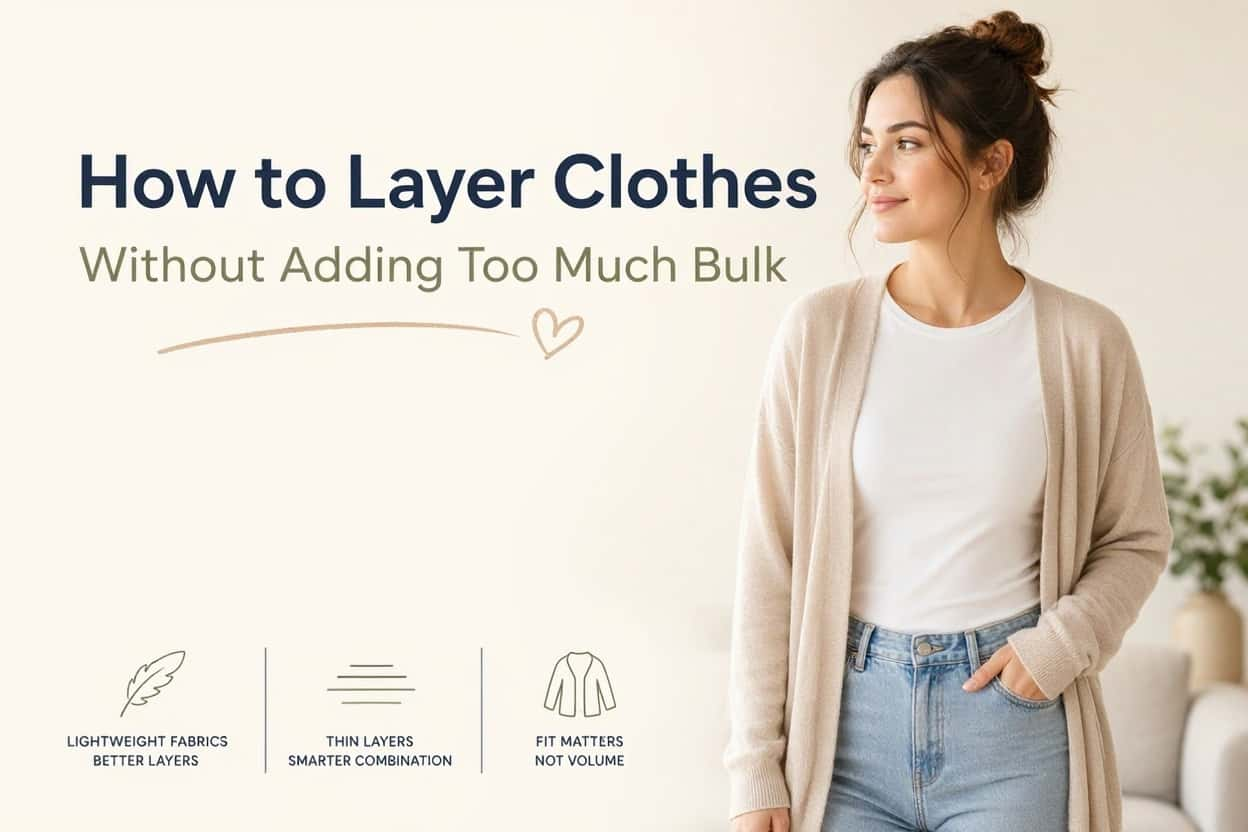
Layering is one of the most useful ways to make a wardrobe work across changing temperatures. A lightweight shirt, a fine-knit sweater, and a jacket can create an outfit that feels more considered than any of those pieces worn alone. The difficulty is keeping the layers comfortable and visually balanced. Too many thick fabrics can make movement awkward, while poorly chosen lengths and proportions can leave an outfit looking unnecessarily heavy.
Good layering is less about wearing more clothes and more about choosing pieces that work together.
Start with thin, comfortable base layers
The first layer has a surprisingly large influence on how everything else fits. A bulky cotton top underneath a thick sweater can create unnecessary volume around the shoulders, waist, and sleeves.
For everyday outfits, look for lightweight cotton, fine merino wool, modal, or other fabrics that sit smoothly against the body. A fitted long-sleeve shirt or a simple thermal top can provide warmth without changing the silhouette of the outer layers.
The base layer does not necessarily need to be tight. It should simply avoid excess fabric bunching around the waist or under the arms. If you plan to wear a button-down shirt beneath knitwear, consider a relatively slim cut with sleeves that can be comfortably adjusted.
Let each layer serve a different purpose
A common mistake is choosing several garments that all provide the same kind of warmth. A thick sweater under a heavily insulated jacket, for example, may be suitable for freezing temperatures but often feels excessive in milder weather.
A more flexible combination uses layers with different functions. The base layer manages comfort, the middle layer provides insulation, and the outer layer protects against wind or rain.
A cotton shirt can work well under a fine cardigan, while a lightweight quilted vest adds warmth without making the arms feel restricted. On colder days, a thin fleece or wool mid-layer can provide considerable insulation beneath a properly fitted coat.
Thinking about function also makes it easier to remove individual layers when moving between outdoor and indoor environments.
Pay attention to fabric thickness and texture
The visual weight of an outfit is not determined by thickness alone. A dense wool coat, a chunky cable-knit sweater, and heavy denim can compete for attention even if each item looks good individually.
Try combining one substantial fabric with lighter materials. A textured wool cardigan, for example, often looks more balanced with a smooth cotton shirt and relatively streamlined trousers.
Texture can also create interest without requiring additional garments. Ribbed knitwear, brushed cotton, smooth leather, and crisp poplin each contribute a different surface quality. When these textures are combined carefully, a simple layered outfit can look detailed rather than cluttered.
Use garment lengths deliberately
Layering becomes much easier when the lengths of individual pieces are considered together.
A shirt that extends slightly below a sweater can create a clean visual line, especially when the shirt hem is not excessively long. A short jacket worn over a longer knit top can also work, provided the difference in length looks intentional.
However, several garments ending at nearly the same point can sometimes make an outfit appear bulky around the waist. In other situations, too many visibly overlapping hems can create unnecessary horizontal lines.
One practical approach is to choose a clear outer silhouette first, then add inner layers that support it. A longer coat generally works well with relatively simple inner proportions, while a shorter jacket may benefit from a slightly longer base layer.
Avoid unnecessary volume around the shoulders
The shoulder area is particularly important because several layers can restrict movement there. If a jacket already has a structured shoulder, wearing a thick sweater underneath may cause the sleeves to pull or the upper body to look disproportionately large.
Before purchasing an outer layer, try it over the kind of clothing you normally wear. Raise your arms, reach forward, and move your shoulders. A jacket that looks excellent over a thin shirt may become uncomfortable over knitwear.
Sleeve construction matters too. Raglan sleeves and relaxed shoulder designs can sometimes accommodate additional layers more comfortably than narrow, sharply structured sleeves.
Choose colors that make layering look intentional
Color coordination can help distinguish individual garments without making the outfit feel busy.
Using variations of one color is a reliable starting point. Different shades of navy, brown, grey, or olive can create depth while maintaining visual continuity. Another option is to keep the base layers relatively quiet and introduce one contrasting color through a sweater, scarf, or outer garment.
It is not necessary for every layer to match. In fact, small differences in tone can make an outfit feel more natural. What matters is that the colors have some relationship to one another rather than appearing randomly assembled.
Adapt the number of layers to the weather
Layering should respond to actual conditions rather than follow a fixed formula. In cool, dry weather, a shirt and lightweight jacket may be sufficient. Windy conditions call for a protective outer layer, while damp weather makes fabric choice particularly important.
Merino wool is useful because it provides warmth without excessive weight. Cotton is comfortable in mild conditions but can become unpleasant when wet. Technical fabrics may be more practical for outdoor activities where moisture management is important.
A compact scarf or thin vest can also provide adjustable warmth without requiring a completely different outfit.
Make comfort the final test
An outfit may look well balanced in a mirror but still fail during a normal day. Tight sleeves, bunching at the waist, and a coat that becomes difficult to close are signs that the layers have not been chosen well.
The best combinations allow you to move naturally, remove a garment when necessary, and remain comfortable as temperatures change.
Ultimately, successful layering comes down to restraint. A few well-chosen pieces with different weights, useful functions, and compatible proportions will usually look better than several garments added simply because the weather feels cold.
